Workforce development
The Cancer Care Navigator Workforce Development Programme
A competency framework for Māori Cancer Care Navigators, a staged pathway for developing that capability over time, and a learning programme that puts both into practice. Built through evidence synthesis, job description analysis, learner and provider input, governance review and iterative co-design.
The Korowai Kohu Matahiapo
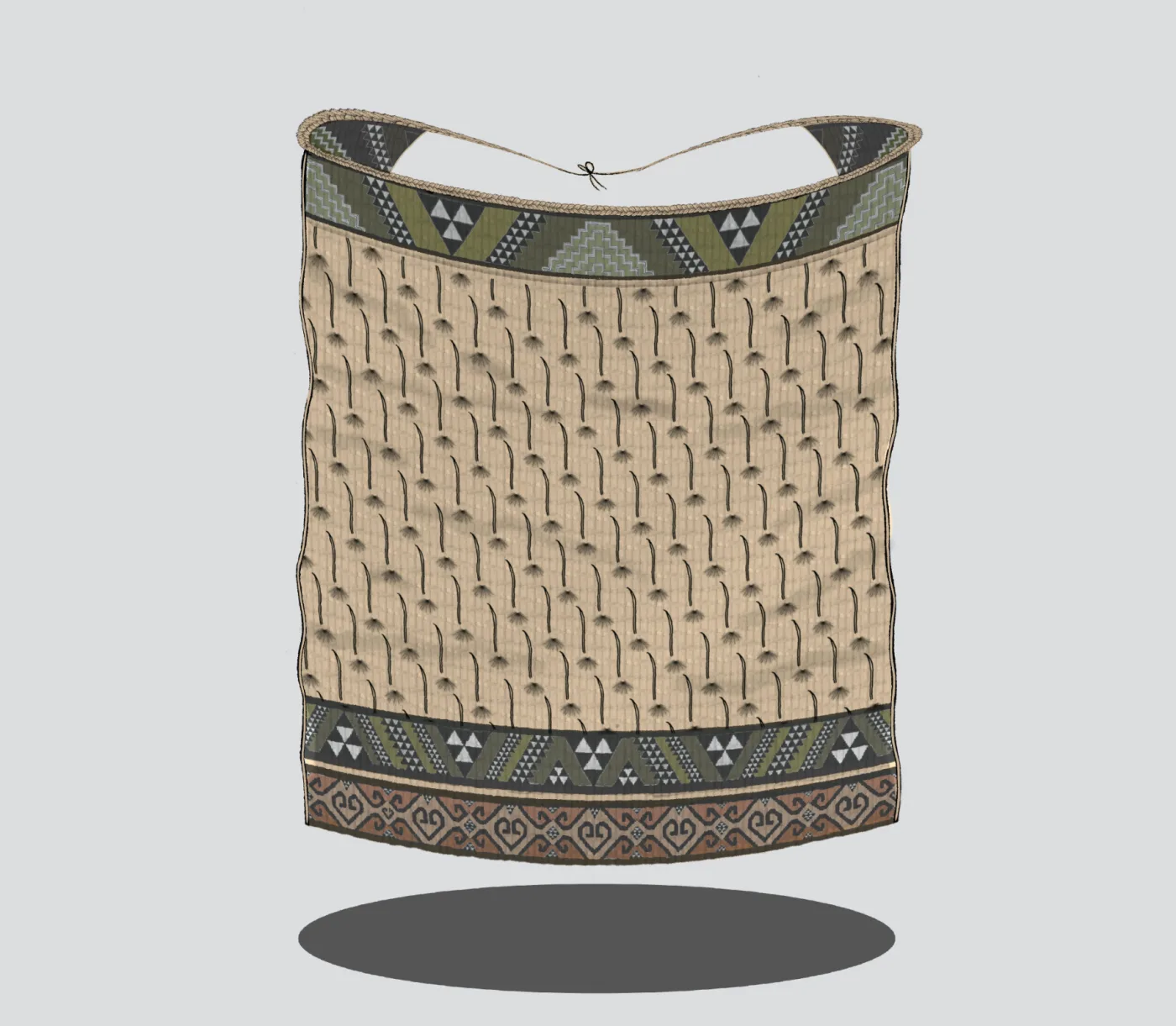
The competency framework takes the form of a korowai. In the report’s words, it “was not treated as decorative imagery” — it is the structure through which values and competencies are held together. Within it, the Aho are the values that run through practice, and the Whenu are the competencies that make that practice visible, teachable and supportable.
Aho — the eight values
- Tikanga
- Ethical and culturally safe practice
- Whanaungatanga
- Building and sustaining relationships
- Ngā Kete Mātauranga
- Sharing and applying knowledge
- Āhurutanga
- Safe, inclusive, welcoming spaces with compassionate, coordinated support
- Rangatiratanga
- Leadership and autonomy
- Manaakitanga
- Grounded in collective wellbeing
- Akitanga
- Enhances mana through communication, fostering healing and identity while strengthening connections and shared experiences
- Wairuatanga
- Honouring spiritual wellbeing
The visual identity of the korowai is the work of Duan Poaneki, acknowledged in the report as the designer “whose creative work gave visual identity and life to this kaupapa”. It is not reproduced here.
The poutama — how capability is built
Capability develops in stages rather than all at once, and the programme is organised around four of them. The first has been built and tested; the rest are the work ahead.
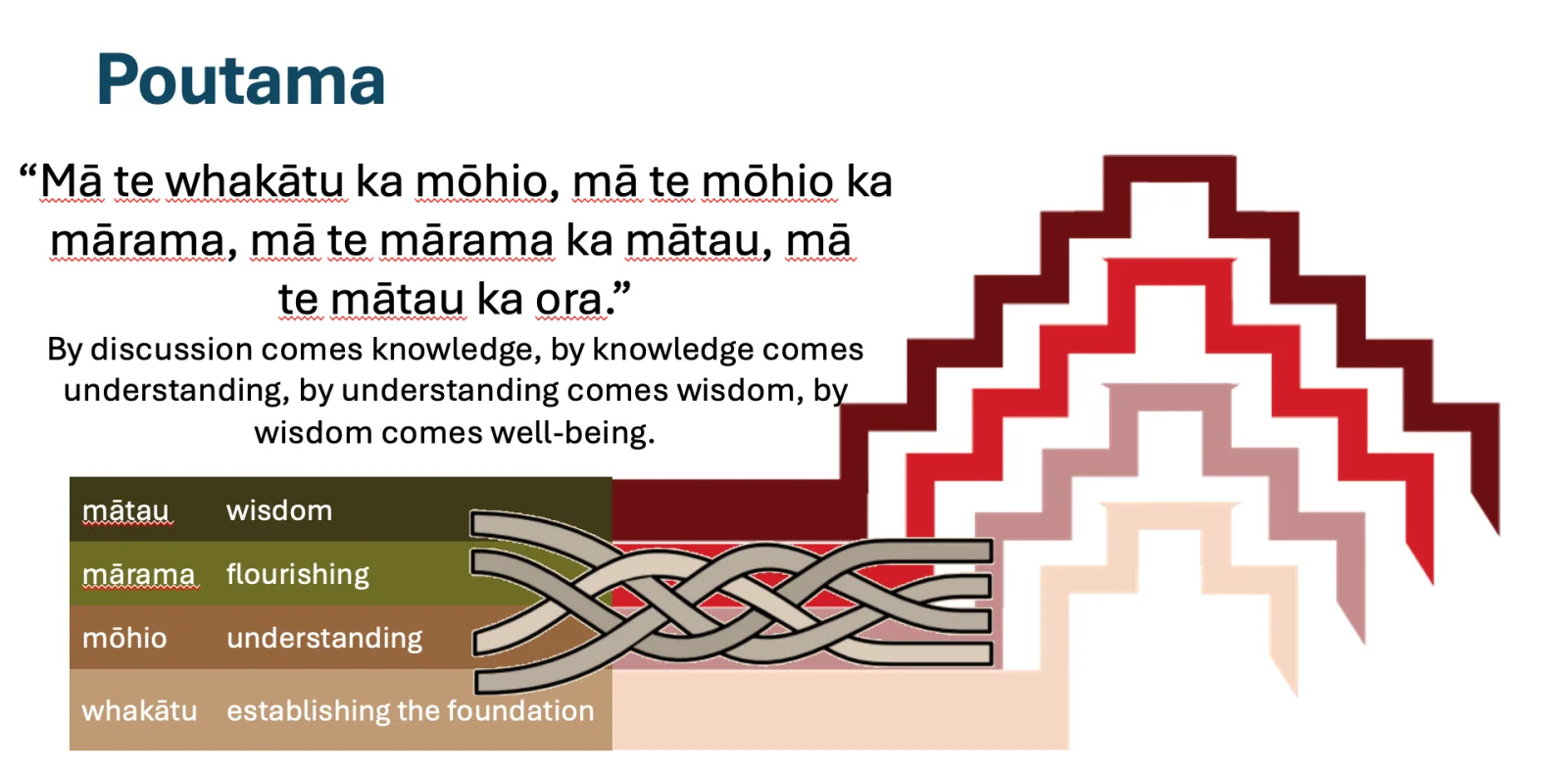
Mā te whakātu ka mōhio, mā te mōhio ka mārama, mā te mārama ka mātau, mā te mātau ka ora.
By discussion comes knowledge, by knowledge comes understanding, by understanding comes wisdom, by wisdom comes well-being.
Whakātu — establishing the foundation
Built and tested
The foundation: the point at which learners are introduced to the relational, cultural, professional and navigational capabilities needed to enter the role safely.
Mōhio — understanding
Not yet built
Developing understanding, where learners consolidate knowledge and recognise how competencies apply across different situations.
Mārama — flourishing
Not yet built
Deeper integration and growing confidence, where understanding becomes more connected, responsive and adaptable.
Mātau — wisdom
Not yet built
Mature capability, where knowledge, judgement, reflexivity and experience are more fully embodied.
The learning programme
The nineteen competencies are taught as six domains rather than nineteen separate modules, because relational, cultural, organisational and technical demands are met together in practice. The sequence is deliberate: relationship, context and communication come before assessment, navigation and health knowledge.
Kāhui 1
Whakawhanaungatanga: Building Trust
Grounding relationships with whānau, communities and colleagues.
- Whakawhanaungatanga (Relational Practice)
- Whānau, Hapū, Iwi (Community Context)
- Te Reo Māori (Language & Communication)
Kāhui 2
Strengthening Whānau Aspirations
Understanding strengths, dreams and barriers; reframing assessment as kōrero.
- Moemoeā (Whānau Aspirations)
- Poipoia (Whānau Empowerment)
- Taiao (Knowing Barriers)
Kāhui 3
Coordinating Care & Navigation
Guiding whānau, basic system awareness, warm handovers.
- Whakamahere Ratonga (Financial & Resource Navigation)
- Whare Mahana (Whānau Navigation & Advocacy)
- Mana Motuhake (Reflexivity & Authenticity)
- Aroha (Care Coordination)
- Muka (Referral & Linkage)
Kāhui 4
Cultural Safety & Seeking Support
Practising cultural safety, knowing limits, escalation pathways.
- Kawawhakaruruhau (Cultural Safety)
- Māngai Haumaru (Foresight & Safe Escalation)
- Kotahitanga (Unity in Practice)
Kāhui 5
Professional Practice & Documentation
Role clarity, safe recording, reflective habits.
- Whakaputanga (Documentation)
- Rangatiratanga (Standards & Role Clarity)
- Titiro whakamuri, kia anga whakamua (Reflective Practice & Learning)
Kāhui 6
Foundations of Health Knowledge
Key health concepts, pathways and holistic models.
- Ngā Kete Mātauranga (Health Knowledge)
- System Awareness
Hauora Māori Partners
Cancer Care Navigators are employed by Hauora Māori Partners across the motu. These are the partners funded from 1 July 2025, each met kanohi ki te kanohi in the first quarter of the year.
Ngāti Porou Oranga
Tairāwhiti
Te Kōhao Health
Waikato
Te Oranganui
Whanganui
Te Taiwhenua o Heretaunga
Te Matau-a-Māui
Te Whānau o Waipareira
Tāmaki Makaurau
Tui Ora
Taranaki
Turuki Health
Tāmaki Makaurau
The network is wider than this. Partners who joined before 1 July 2025 are not listed yet.
Interested in the programme?
If this sounds like your mahi
The Whakātu stage is written for people stepping into the Cancer Care Navigator role in their first four to six weeks, and for kaimahi already doing the mahi who have not had structured learning behind them. If that is you, or someone in your team, tell us and we will let you know when it opens.
Register your interestIf you want to know more
Providers, funders, researchers and anyone working alongside the navigator workforce are welcome to ask about the framework, the poutama or how the programme is being rolled out.
Ask a questionFunded by
The Cancer Care Navigator Workforce Development Programme is funded by Health New Zealand | Te Whatu Ora.